
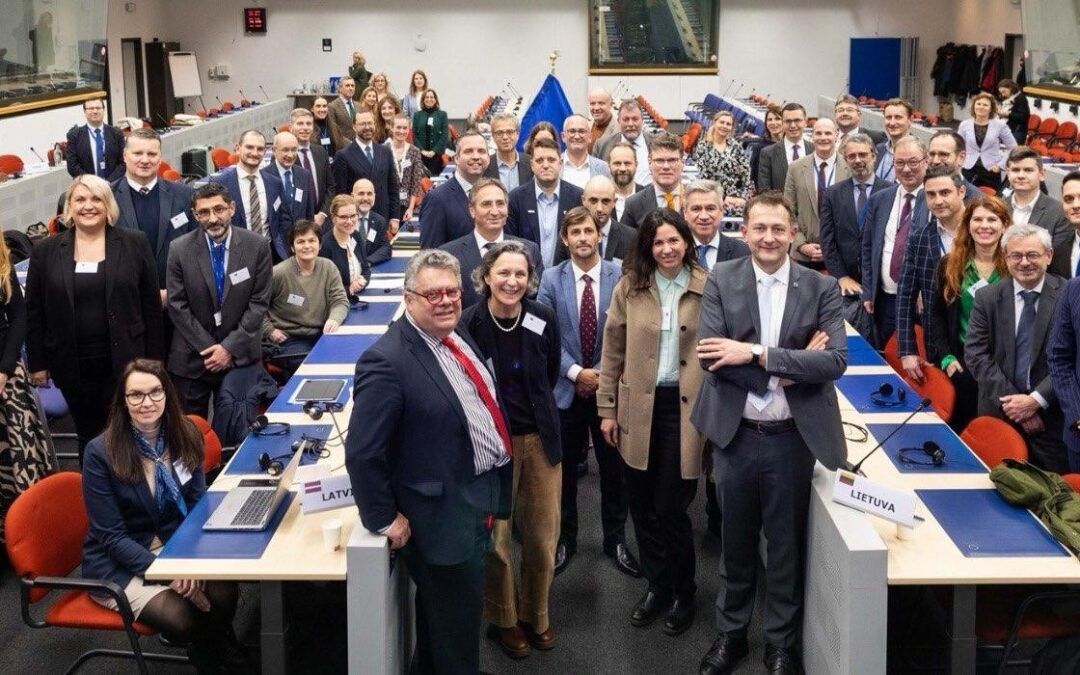
Following the first high-level meeting on September 11, the European Commission has succeeded in producing a constructive summary of the current situation of European viticulture and the solutions for overcoming the structural crisis into which the sector has been plunged for several years.
AREV (Assemblée desRégions Européennes Viticoles) is delighted that Commissioner Christophe Hansen has taken our proposals into consideration, and that he has indicated his willingness to integrate three essential points raised by our organization:
- Create a crisis management fund: The Commissioner has confirmed that the current 250million euro agricultural fund is unable to respond to the political crises affecting winegrowing. He undertook to ask his services to work on the creation of a genuine emergency fund to deal with retaliatory measures.
- Guarantee farm profitability: The priority remains for winegrowers to be able to make a decent living from their work. It is unacceptable that administrative complexity should prevent them from being present in their vineyards, forcing them to devote precious time to redundant and time-consuming procedures.
- Promote precision farming and irrigation development: These are essential, especially in regions affected by recurrent drought. Wine tourism must also be promoted as alever for rural development.
AREV also insisted on:
- Better use of the market observatory: This tool needs to be more widely distributed and exploited. It represents an indispensable tool for assessing needs and ensuring the flexibility of wine production.
- Management of grubbing-up must remain cautious and adapted: Definitive grubbing-up must be used sparingly. The survival of major wine-growing areas depends on it. On the other hand, temporary grubbing-up should be considered asa tool for restructuring and adapting vineyards.
- A Marshall Plan for soil life: It’s crucial to preserve and revitalize winegrowing soils.
Lastly, AREV reaffirms its support for modern, sustainable viticulture, focusing on precision farming, the development of irrigation and the promotion of wine tourism as a vector forrural development.
AREV remains fully committed to dialogue with winegrowing regions and the European Commission to defend a strong, sustainable European winegrowing industry.


