
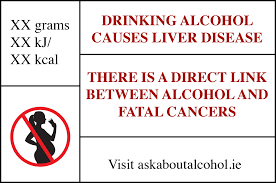
On 22 May, Ireland adopted the Public Health (Alcohol) (Labelling) Regulations 2023 and the remaining provisions of Section 12 of the Public Health (Alcohol) Act, thereby legislating at national level for the labelling of wine, equating its consumption with the harmful consumption of alcohol and making no distinction between it and high alcohol content beverages.
In the knowledge that this is an infringement of the Single Market, as Claire Gordon, Director of the Alcohol and Tobacco Control Unit of the Irish Department of Health, stated on 1 February at an event organised by the Swedish Presidency ofthe Council of the EU, this regulation will come into force in Ireland on 22 May 2026.
With the approval a few days ago of the Public Health (Alcohol) (Labelling) Regulations 2023 and the remaining provisions of Article 12 of the Public Health (Alcohol) Act, Ireland has taken a further step in its unilateral decision to label alcoholic beverages regardless of their strength.
“The decision of the Irish authorities to adopt the law on the labelling of alcoholic beverages leaves us very perplexed,” said AREV Secretary General Francisco Martinez Arroyo.
It should be noted that 13 EU Member States had already expressed their opposition and the AREV had already warned a few months ago, in February, that the Commission’s failure to take a position on this proposal was jeopardising the joint democratic work being done to agree on harmonised criteria for labelling.
“Despite the expiry of the 90-day notification period to the WTO, Ireland has failed to take into account the fact that 10 countries (including the United States andMexico) have expressed their opposition and that the Irish draft regulation should still be discussed at WTO level at the next meeting of the Technical Committee on Trade Barriers scheduled for 21 June” said the Secretary General.
“In February, we sent a letter to the Commissioners for Agriculture and for Health and Food Safety, asking them to take a clear position on Ireland’s unilateral attempt to label alcoholic beverages, regardless of their alcohol content, in the knowledge that the competences are health-related, but that Europe must work across the board on issues that affect different areas of European regions, in this case the socio-economic and environmental fabric of rural areas linked to the wine sector, to Europe’s culture” said Martínez Arroyo.
“It was only a few days after the Irish law came into force that we heard from Mrs Stella Kyriakides, Commissioner for Health and Food Safety. The Commissioner for Health and Food Safety, Stella Kyriakides, told AREV that the Commission had not reacted under the Single Market Transparency Directive or the Regulation on the Provision of Food Information to Consumers, and that the Commission was working on measures to improve consumer information and health literacy, including possible labelling of alcoholic beverages, and was preparing an impact assessment by carrying out an extensive data and evidence gathering exercise. We hope that they will also take into account the studies on wine, which are linked to our Mediterranean diet, a UNESCO Intangible Cultural Heritage of Humanity”,said Martínez Arroyo, who is also President of the Mediterranean Diet Foundation.
The AREV has always opposed the measures proposed by Ireland, which equate alcohol consumption with alcohol abuse. Failure to differentiate between levels of consumption sends an incorrect and unclear message to consumers and does not provide them with a qualified message about the real risks to their health. Scaremongering consumers with extreme messages in the hope that they will refrain from drinking is a paternalistic way of dealing with a real problem and also shows a lack of understanding of the real phenomena and causes of alcohol abuse.
The AREV strongly supports the implementation of actions to combat cancer and, to this end, considers that the concept of responsible consumption must be at the heart of policies to prevent and combat excessive consumption, and urges its territorial representatives in the European wine-producing regions to step up actions to explain the cultural, social and economic importance of wine and to educate the population to consume it in a conscious and moderate way.
The AREV points out that the Irish law fragments theEuropean single market and constitutes an obstacle to trade and that, at European level, the labelling of alcohol content is already harmonised by Regulation 1169/2011 (Food Information to Consumers) and Regulation 2021/2117(Single CMO) and hopes that the next meeting of the Technical Committee on Barriers to Trade, scheduled for 21 June, will bring reason and balance by calling for the amendment of this regulation to bring it into line with the harmonised legislation and agreements of the European Union.


